Your website might have great copy. Clean design. Fast load times. A compelling offer.
And you’re still losing customers to competitors with worse products — because those competitors have something you don’t: visible, believable proof that other people trust them.
That’s social proof. And in 2026, it’s not a “nice to have” on your website. It’s the mechanism by which purchasing decisions actually happen.
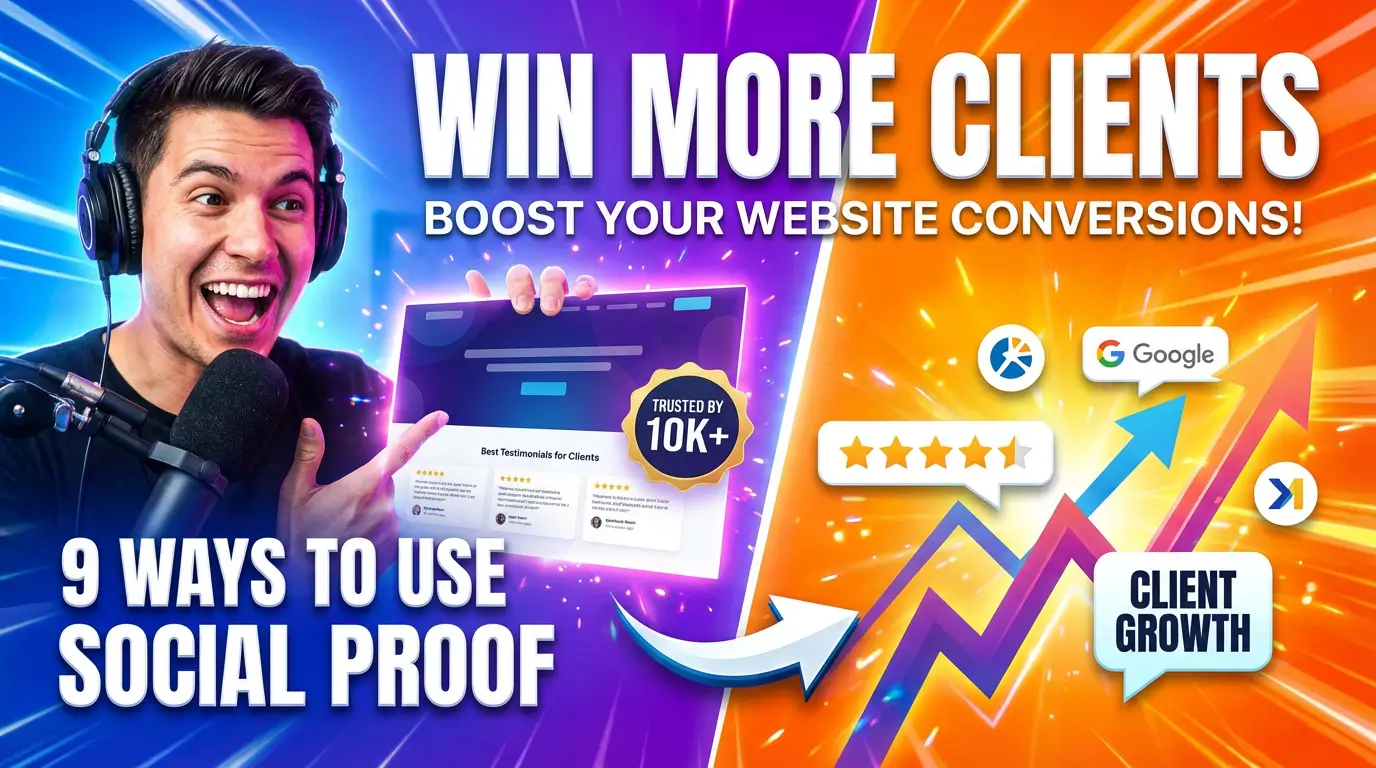
This post pulls together 58 statistics from across the research landscape — reviews, star ratings, testimonials, user-generated content, trust badges, B2B peer signals — to give you a clear-eyed picture of how social proof influences conversions and what your website should be doing about it.
The Big Picture: Why Social Proof Dominates Buying Decisions
Before we get tactical, here’s how much social proof has taken over the buyer’s journey.
-
98% of consumers read online reviews at least sometimes — only 2% say they never read them. (WiserReview)
-
97% of consumers read online reviews before choosing a local business. For all practical purposes, the pre-purchase review check is universal. (WiserReview)
-
88% of consumers trust user reviews as much as personal recommendations from friends and family. Strangers on the internet now carry nearly the same weight as your best friend’s word-of-mouth. (WiserReview)
-
Trust influences 88% of consumer buying decisions in 2025. Before your price, your features, or your design, trust is the deciding factor. (Amra & Elma)
-
72% of consumers trust customer reviews more than a brand’s own product descriptions. Your marketing copy is less convincing than what your customers say about you. (WiserReview)
-
41% of consumers “always” read reviews when browsing — up sharply from 29% the prior year. The habit is intensifying, not plateauing. (WiserReview)
-
Consumers now use an average of 6 review sites during their research, up from fewer in previous years. A presence on one platform is no longer enough. (WiserReview)
-
92% of consumers feel hesitant to buy when there are no customer reviews available. Absence of social proof is actively damaging. (WiserReview)
-
40% of consumers avoid buying products that have no reviews at all. No reviews isn’t neutral — it’s a signal that sends shoppers away. (WiserReview)
How Many Reviews Do Consumers Actually Need?
Volume matters. Here’s the data on what buyers expect to see before they feel confident.
-
Consumers read an average of 10 reviews before feeling ready to make a purchase. It takes a body of evidence, not a single glowing testimonial. (WiserReview)
-
Consumers spend an average of 13 minutes and 45 seconds reading reviews before deciding to trust a local business. It’s research, not a casual glance. (WiserReview)
-
68% of consumers form an opinion after reading between 1 and 6 reviews. The first impression window is small — which means your first few reviews carry disproportionate weight. (WiserReview)
-
All age groups expect an average of 112 reviews on a product or business before they consider the sample size credible. (WiserReview)
-
Shoppers aged 18–24 expect an average of 203 reviews per product — nearly double the cross-generational average. Younger buyers are the most skeptical and the most research-driven. (WiserReview)
-
91% of 18–34-year-olds trust online reviews as much as personal recommendations from people they know. (WiserReview)
-
75% of consumers search for reviews or testimonials before buying — not just for major purchases, but for everyday decisions as well. (WiserReview)
Star Ratings: The Conversion Math You Need to Know
Star ratings are a blunt instrument that most business owners underestimate. Here’s what the data actually says.
-
71% of customers won’t even consider a business rated below 3 stars. The bar to be taken seriously has a floor — and it’s 3.0. (WiserReview)
-
31% of consumers will only use a business with a 4.5-star rating or higher, nearly double the 17% who felt that way the prior year. Consumer standards are escalating fast. (WiserReview)
-
Products with a 4.25–4.99 average rating have the highest conversion rates. A perfect 5-star rating actually performs comparably to a 3.0–3.49 average — perfect looks fake. (PowerReviews)
-
A 3.5-star rating is increasingly viewed as inadequate — 6% fewer consumers were willing to use businesses with a 3.5-star rating in 2024 compared to 2023. The goalposts keep moving up. (WiserReview)
-
A one-star increase in rating can lead to a 5–9% increase in revenue. For businesses in competitive markets, a rating bump has direct, measurable revenue impact. (WiserReview)
-
Positive ratings increase the likelihood of a consumer choosing a local business by 68%. (WiserReview)
How Reviews Directly Drive Revenue and Conversions
This is where the business case becomes impossible to ignore.
-
Displaying reviews can increase conversion rates by up to 270% for products with five or more reviews, compared to products with no reviews. (WiserReview)
-
67% more purchases happen when customer reviews are visible on a website. (WiserReview)
-
Reviews can boost conversion rates by 380% for higher-priced products and 190% for lower-priced ones. The more expensive the purchase, the more critical the social proof. (WiserReview)
-
Products with positive ratings see a 68% higher likelihood of being chosen by consumers over unrated alternatives. (WiserReview)
-
WikiJob added customer testimonials to their site and conversions climbed 34% — one of the most cited A/B test results in conversion rate optimization. (Linear Design)
-
Customers spend up to 31% more on products with excellent reviews compared to products with mediocre or no reviews. (WiserReview)
-
Positive Google reviews can result in an 18% increase in conversion rates in search results. Your Google Business Profile isn’t just a directory listing — it’s a conversion asset. (WiserReview)
-
86% of shoppers hesitate to purchase from businesses with negative online reviews. One bad public experience that goes unanswered can poison the well for every visitor who comes after. (WiserReview)
-
One unaddressed negative review can drive away 30 out of 50 potential customers. That’s a 60% deflection rate from a single unconsidered bad review. (WiserReview)
Review Freshness: When Old Reviews Work Against You
Having reviews isn’t enough. When those reviews were written matters just as much.
-
73% of consumers only trust reviews left in the last month. A review from 18 months ago may do you more harm than good by signaling inactivity. (WiserReview)
-
20% of consumers only read reviews written within the previous two weeks. For this segment, a static review profile is effectively invisible. (WiserReview)
-
58% of consumers say the freshness of reviews directly affects their purchase decisions. A business with 500 reviews from two years ago can lose to a competitor with 50 reviews from this month. (WiserReview)
-
70% of consumers rarely visit an unfamiliar business without first checking for recent reviews. Recent social proof is table stakes for first-time customer acquisition. (WiserReview)
Responding to Reviews: The Low-Effort Competitive Advantage
Here’s a gap that almost no business is exploiting — despite the data being overwhelming.
-
Only about 5% of businesses respond to their online reviews — yet 89% of consumers expect a response. (WiserReview)
-
89% of consumers expect businesses to respond to their reviews. Not responding is a silent signal that you don’t care. (WiserReview)
-
19% of consumers expect a same-day response — up from just 6% the year before. Consumer patience is shrinking. (WiserReview)
-
Businesses that reply to reviews at least 25% of the time average 35% more revenue than those that don’t respond. (WiserReview)
-
People spend up to 49% more at businesses that reply to reviews. Responsiveness signals operational quality and genuine customer care. (WiserReview)
-
3 in 4 businesses don’t reply to negative reviews at all — leaving the most damage-prone reviews on the table without a counterpoint. (WiserReview)
-
56% of consumers have changed their opinion about a business based on how it responded to a review. A thoughtful reply to a negative review can convert skeptics into buyers. (WiserReview)
-
Customer churn can increase by 15% when businesses don’t respond to feedback. Non-response is a retention risk, not just an acquisition problem. (WiserReview)
User-Generated Content and Testimonials: The Authenticity Advantage
Reviews are just one form of social proof. Here’s what the data says about UGC, testimonials, and visual proof.
-
UGC can increase conversion rates by up to 166% and decrease cart abandonment by 2.5%. Letting customers create content for you is one of the highest-ROI moves available. (WiserReview)
-
66% of consumers trust product reviews more when they include photos or videos. Visual evidence of real usage dramatically increases perceived authenticity. (WiserReview)
-
75% of marketers believe that user-generated content makes their marketing more engaging than brand-created content. (WiserReview)
-
63% of consumers say testimonials featuring real, named customers are more credible than anonymous quotes. The more specific and human the testimonial, the more trust it builds. (WiserReview)
-
82% of shoppers use their phones to read online reviews while in physical stores. Social proof follows buyers even into brick-and-mortar environments. (WiserReview)
-
Personalized landing pages with social proof components increased conversions by 68% in one B2B case study. Showing the right proof to the right audience segment multiplies the effect. (Involve.me via YourWebTeam)
Video Testimonials: The High-Impact Format Most Businesses Skip
-
79% of people have watched a video testimonial to learn about a product or service. Video proof isn’t a niche format — it’s mainstream buyer behavior. (WiserReview)
-
Video testimonials provide an 80% higher conversion uplift than text reviews alone. The combination of tone, face, and specificity in video makes it dramatically more persuasive. (WiserReview)
-
Video testimonials are the single most-requested type of product content by buyers evaluating high-consideration purchases. (Genesys Growth)
B2B Social Proof: What Works When the Stakes Are High
In B2B, buying decisions involve multiple stakeholders, larger budgets, and much longer cycles. Social proof plays a different — and arguably more critical — role.
-
73% of B2B marketing executives rank word-of-mouth and peer recommendations as the most influential factor in vendor consideration. Before a B2B buyer evaluates your website, your reputation among their network has already done the work. (Corporate Visions)
-
82% of B2B buyers say the experiences of their peers play a significant role in their provider selection process. G2 reviews, LinkedIn recommendations, and customer case studies carry enormous weight. (G2 via Mixology Digital)
-
53% of B2B decision-makers rely on case studies when assessing potential vendors. A detailed, results-specific case study is one of the most influential documents a B2B company can publish. (The Insight Collective)
-
84% of B2B executives review a company’s social media presence before deciding to work with them. Your social proof extends to your LinkedIn activity, comments, and follower count. (WiserReview)
-
In 95% of B2B purchasing situations, buyers ultimately choose from a Day One shortlist of four vendors. Getting onto that shortlist requires visible credibility signals — reviews, case studies, client logos — before the buyer ever talks to your sales team. (6sense)
Trust Badges and Security Signals
Social proof isn’t just reviews. Here’s how trust seals and security signals affect visitor behavior.
- Website security badges and trust seals can increase conversion rates by up to 48%. For checkout pages and lead generation forms especially, visible security indicators reduce friction and anxiety. (Growbo)
What This Data Actually Means for Your Website
The through-line across all 58 statistics is the same: your buyers are doing the vetting before you get to make your pitch.
They’re checking Google. They’re reading reviews. They’re watching testimonials. They’re asking peers. They’re looking for client logos and case studies. And they’re forming conclusions about your trustworthiness in seconds — mostly based on what other people say about you, not what you say about yourself.
Here’s how the data translates to practical action:
1. Make reviews visible, not buried. Put testimonials and star ratings on your homepage, your service pages, and your contact page. Don’t make visitors hunt for proof.
2. Build a systematic review collection process. Most businesses wait passively. Automated post-purchase or post-service review requests consistently outperform doing nothing.
3. Respond to every review — especially the negatives. Only 5% of businesses do this consistently. It’s one of the most underexploited competitive advantages in local marketing.
4. Keep your proof fresh. A review page that hasn’t been updated since 2023 signals to buyers that your business may have declined. Aim for new reviews every month.
5. Use real names, photos, and specifics. Anonymous testimonials convert worse than ones tied to a real person with a name, company, and outcome.
6. For B2B: publish detailed case studies. Not a one-paragraph summary — a real walk-through of the problem, the process, and the measurable result.
7. Add trust signals at moments of friction. Security seals, SSL indicators, and certification badges are most powerful on checkout pages and contact forms where anxiety is highest.
The Bottom Line
Social proof isn’t about collecting nice quotes to fill a website section. It’s the primary mechanism by which buyers decide whether you’re worth their time, money, and trust.
Businesses that actively manage their review presence, publish detailed testimonials, and respond to customer feedback consistently outperform those that don’t — across every industry, every price point, and every buyer type the research covers.
If your website doesn’t have a clear social proof strategy baked in from the homepage to the CTA, you’re not competing on a level playing field.
Ready to build a website that actually converts? At YourWebTeam, we design and develop websites built around conversion principles — including how and where to use social proof to turn skeptical visitors into paying clients.
- social proof
- website statistics
- conversion rate optimization
- online reviews
- testimonials
- trust signals
- web design

Richard Kastl
Founder & Lead EngineerRichard Kastl has spent 14 years engineering websites that generate revenue. He combines expertise in web development, SEO, digital marketing, and conversion optimization to build sites that make the phone ring. His work has helped generate over $30M in pipeline for clients ranging from industrial manufacturers to SaaS companies.