Google just gave brands and creators another piece of Search they can control.
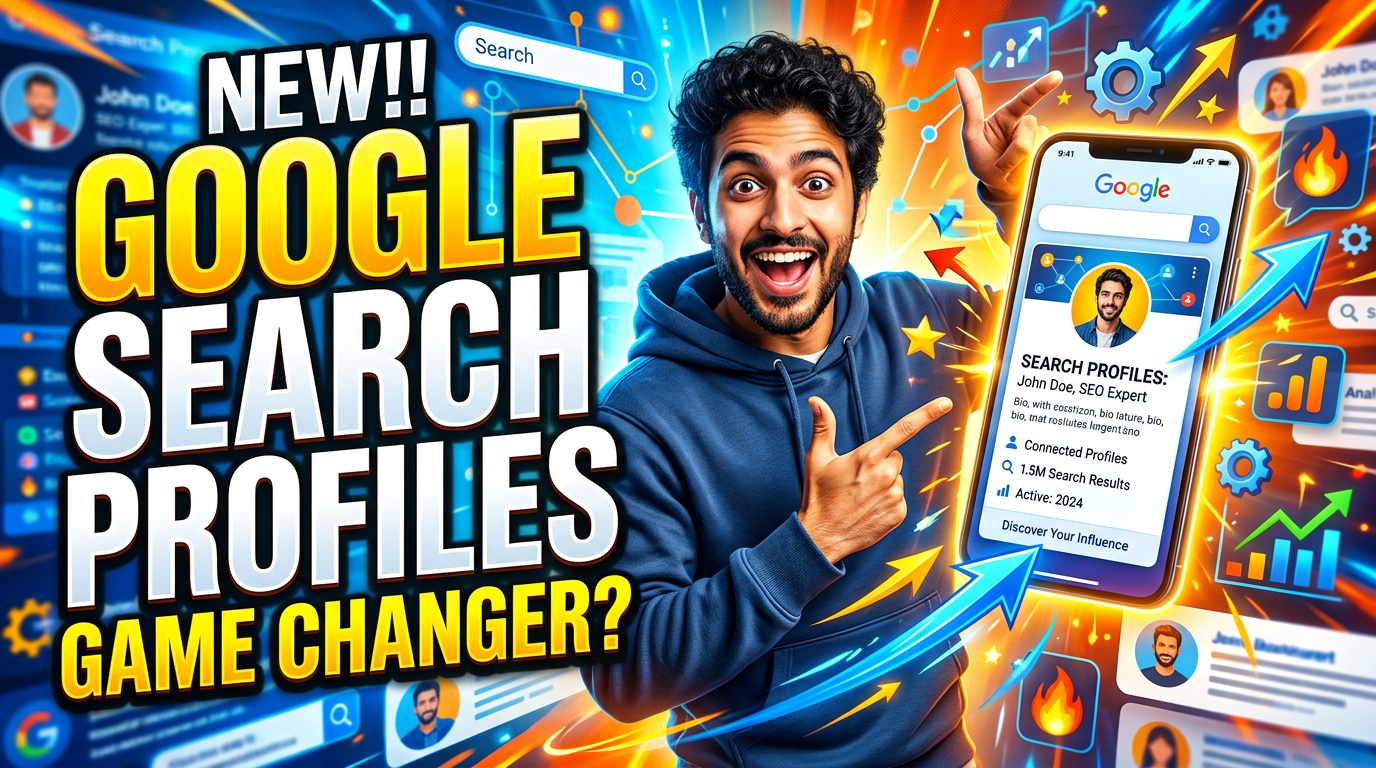
Google Search profiles are dedicated pages that collect a source’s articles, videos, and social posts in one place. A profile can appear through a mobile knowledge panel, from a publisher or creator name in Discover, or at a direct profile URL.
For most small businesses, there’s a catch. The initial eligibility thresholds are high. That doesn’t make the launch irrelevant. It tells you where Google is taking brand discovery: your website, social accounts, videos, and public identity are being pulled closer together.
Here’s what the feature does, who can use it, and what a smaller company should fix now.
What is a Google Search profile?
A Search profile is a shareable Google page for a publisher, creator, or brand. Google says it can display your avatar, bio, website, linked social accounts, videos, articles, and recent posts. People can follow a source from the profile, which may cause more of that source’s content to appear in their Google Discover feed.
This is different from a Google Business Profile.
A Google Business Profile focuses on a local business location and can show hours, reviews, phone details, directions, photos, and other information used in Google Search and Maps. A Search profile focuses on the content and identity of a publisher, creator, or brand across multiple platforms.
It’s also different from a knowledge panel, although the two can connect. Google says eligible publishers and creators may access their Search profile through a knowledge panel. Claiming a Search profile may also trigger a knowledge panel for an eligible source, while an existing knowledge panel may gain an updated avatar, recent content, and a direct link to the new profile.
The feature launched in the United States in June 2026. Google says it plans to consider a wider rollout and more capabilities later, but it has not published a schedule for either.
Who can claim one right now?
Google’s current Search profile eligibility rules require an adult owner or manager and a qualifying audience on at least one supported platform:
- YouTube: 100,000 subscribers
- Instagram: 100,000 followers
- X: 100,000 followers
- TikTok: 300,000 followers
The content also has to meet Google’s policies. An existing knowledge panel does not remove the audience requirement for creating a new profile, although Google may have already generated a profile for an eligible source.
Those numbers exclude most local companies. A plumbing contractor with 4,000 useful YouTube subscribers can’t claim a profile today. Neither can a regional retailer with 22,000 Instagram followers.
Still, check before assuming you don’t have one. Google tells publishers and creators to visit profile.google.com while signed into the account connected to their creator activity, or search their name and social handle on Google. If Google has created a profile, a “View Search Profile” option may appear near the knowledge panel.
Does a Search profile improve rankings?
Not directly.
Google’s help documentation gives an unusually plain answer: creating a Search profile does not directly affect how your content ranks in Google Search. Following can affect personalization, however. Someone who follows your profile may see more of your work in Discover.
That distinction should shape how you judge the feature.
Don’t treat it like a link-building trick or a new place to stuff keywords. Treat it as a brand presentation and audience-retention tool. A complete profile can help a person verify that they found the right company, move between your channels, and follow future content. None of those actions guarantees a higher organic position.
This also means you shouldn’t pay anyone who promises a Search profile will produce an automatic ranking boost. The official documentation says otherwise.
Why it still matters to a small business
The launch shows Google building a more connected view of sources. A customer may first encounter your how-to video, then view your profile, visit your website, and later see another article in Discover. The channels are separate in your marketing calendar, but they can appear together in Google.
Google’s announcement says Search profiles are designed to help audiences find accurate, current information about sources. The company also says a profile can bring articles, social posts, and videos into a central space. That makes identity consistency more valuable.
If your website says “Harbor Heating & Air,” Instagram says “Harbor HVAC,” YouTube uses an owner’s personal name, and the footer links to an abandoned X account, a customer has to decide whether all four belong to the same company. Google has to make connections across those properties too.
You don’t need 100,000 followers to clean that up.
A practical preparation plan
Even if you’re below the threshold, you can build the inputs Google would need to understand and present your brand.
1. Standardize your public identity
Pick the name customers actually know and use it consistently on your website and active social accounts. Match the logo or headshot, short description, location wording, and primary website URL where each platform allows it.
Consistency does not mean copying an identical bio everywhere. A YouTube description can be longer than an Instagram bio. The underlying facts should agree: who you are, what you do, where you operate, and which site is official.
Audit old accounts before linking them. A dormant profile with an outdated phone number is not helping. Update it, clearly identify the active account, or remove links to it from your site. Our guide to common small business social media mistakes explains how inconsistent branding and neglected profiles weaken the rest of your marketing.
2. Make your website the source of truth
Your site should contain a clear About page, current contact information, author or leadership information where appropriate, and links to official social accounts. If your brand name has changed, explain the relationship instead of leaving customers to guess. Use this website rebrand checklist to update the other places where old identity signals commonly linger.
Google’s Organization structured data documentation says organization markup can help Google understand administrative details such as a name, logo, address, contact information, and business identifiers. The documentation also recommends using the sameAs property for URLs that identify the organization on other sites.
Structured data won’t make an ineligible business qualify for a Search profile. It can give search systems a cleaner machine-readable description of the company behind the website. It also supports the broader trust signals AI search systems look for, especially when your schema, visible business details, and third-party profiles agree.
Have your developer validate the markup with Google’s Rich Results Test and check that the visible page supports the same facts. Markup should describe what is real, not invent a larger brand footprint.
3. Choose one content platform you can maintain
The eligibility list may tempt a business to start posting everywhere. That usually produces four weak accounts instead of one useful channel.
Choose based on the questions customers ask and the material your team can create. A remodeler can document before-and-after work on YouTube. A restaurant can show menu changes and events on Instagram. A software consultant may have stronger material for YouTube demonstrations or written articles.
Google says new content from a linked platform typically appears on a Search profile within 24 hours. That makes a neglected account visible too. A sustainable publishing rhythm matters more than opening another profile you won’t touch.
4. Build content around proof
Small businesses don’t need to imitate full-time influencers. Useful proof is often easier to produce:
- Show the work, including the process and finished result.
- Answer a real sales or service question with specifics.
- Explain who a service is not right for.
- Introduce the people customers will meet.
- Turn one useful job or customer question into a web page, short video, and social post suited to each channel.
Keep the facts aligned while changing the format. A 700-word repair guide, a three-minute demonstration, and a 30-second clip can cover the same issue without being duplicate experiences.
5. Keep ownership under business control
Google’s setup instructions say the claimant signs in with a Google Account and verifies at least one qualifying content platform. If a YouTube channel exists, Google recommends using the same Google Account or a channel manager account.
Don’t build this on an employee’s personal login. Use company-controlled access, document recovery methods, and give at least two trusted people appropriate administrative access. The same rule applies to your domain registrar, analytics, social accounts, and Google Business Profile.
When a staff member or agency leaves, remove access promptly. A marketing asset is not truly owned if the company can’t recover it.
What eligible businesses should do
If you meet a follower threshold, start by checking whether Google has already made a profile. Review every account connected to it before claiming because Google may associate existing accounts with the same identity.
Then:
- Go to profile.google.com/claim and sign into the Google Account you want to own the profile.
- Authenticate a supported platform that meets the follower requirement.
- Review the assigned handle, connected accounts, avatar, bio, website, and content.
- Add other official platforms only after confirming they are current and properly controlled.
- Search your brand name and handles on mobile to see how the profile and knowledge panel appear to a customer.
Google says the profile handle is based on the most-followed linked platform, or the next most-followed platform when that handle is unavailable. Factual edits such as a name, bio, or social link may remain pending while Google reviews them. Allow time for approval instead of making repeated changes during a campaign.
If you manage separate identities, such as a company, podcast, and founder brand, Google says each should have its own Search profile and Google Account. Don’t combine unrelated audiences simply because one account meets the threshold.
What to measure
Since a profile does not directly raise rankings, measure outcomes closer to its actual purpose.
Track branded searches in Google Search Console. Watch referral traffic from Google properties and social platforms in your analytics. Add campaign parameters to profile links where the platform permits them. Record changes in direct traffic, email signups, quote requests, and assisted conversions after the profile goes live.
Also inspect the profile as a customer would. Is the latest content useful? Does the bio explain the business? Does the website link reach the right page? Are old brand names or duplicate social accounts creating confusion?
A profile with a large following and a vague website link can still waste attention. Send visitors to a page that matches what they just saw, especially when a campaign or service has a dedicated landing page.
The right move for most small businesses
If you qualify, claim the profile, lock down ownership, and present a consistent identity.
If you don’t qualify, don’t chase followers just to unlock it. Fix the foundation: a clear website, accurate organization details, properly linked social accounts, and content that demonstrates real work. Those improvements help customers now and leave you better prepared if Google lowers the thresholds or expands access.
Your brand is already spread across the web. The job is to make every public piece look like it belongs to the same competent business.
Need help cleaning up the website at the center of that identity? Start a project with Your Web Team.