
Most small businesses do not need prettier SEO charts. They need clearer answers.
Are rankings moving in the right direction? Which pages are pulling impressions but not clicks? Which leads came from organic search, not just traffic that looked nice in a monthly recap?
That is where the right reporting stack earns its keep. Google Search Console gives you clicks, impressions, and average position straight from Google. Looker Studio helps turn raw data into shareable dashboards. Then the paid tools layer on rank tracking, automation, white-labeling, and easier cross-channel reporting.
Here are the 9 best SEO reporting tools for small businesses in 2026.
1. Google Search Console, best free source of truth for SEO performance
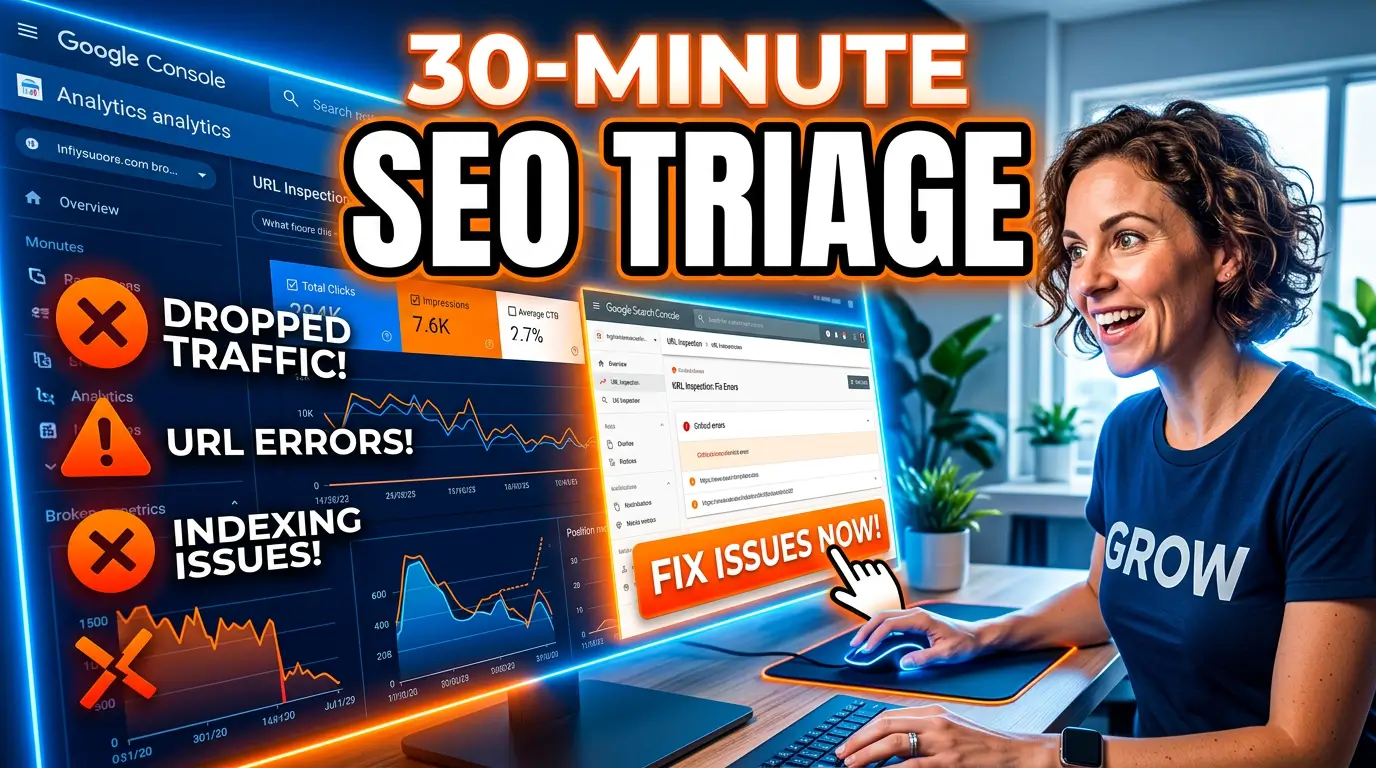
Google Search Console should be the starting point for every small business, even if you eventually pay for something else. Google says its reports help you measure search traffic and performance, analyze impressions, clicks, and position, submit sitemaps, and get alerts when issues affect your site.
That matters because most SEO reporting goes off the rails when the underlying data is weak. Search Console gives you the cleanest read on what people actually searched, which pages showed up, and whether visibility is translating into clicks.
A practical example is a local business that sees impressions rising but leads staying flat. Search Console can show whether the problem is low rankings, poor click-through rate, or irrelevant query matches. For a free tool, it does an enormous amount of heavy lifting.
2. Looker Studio, best free dashboard builder for owners who want one report
Looker Studio is still one of the easiest ways to turn scattered SEO data into one dashboard you can actually share. Google says the platform lets you connect to a wide variety of data sources, build interactive reports, and collaborate in real time.
For small businesses, the win is not fancy design. It is consolidation. You can combine Search Console, GA4, Google Ads, and spreadsheet data into one view so you are not bouncing between tabs during every marketing review.
This is a strong fit for a company owner who wants one monthly scorecard with organic traffic, top landing pages, lead conversions, and callouts for what changed. If your team is comfortable with Google tools and wants to keep software costs low, Looker Studio is hard to beat.
3. AgencyAnalytics, best for agencies or consultants reporting to small business clients
AgencyAnalytics is built around automated client reporting, and that focus shows. The platform highlights SEO dashboards, rank tracking, custom dashboards, and white-labeled reporting for agencies managing multiple accounts.
If you are a consultant or small agency serving local businesses, that matters more than raw feature count. You need clean reports, scheduled delivery, and a simple way to show progress without spending half your week exporting screenshots from five different tools.
A good real-world use case is a boutique SEO shop sending monthly updates to 15 service-business clients. AgencyAnalytics keeps the reporting process consistent, especially when each client wants rankings, traffic, backlinks, and local visibility in one branded report.
4. Databox, best for combining SEO with revenue and pipeline metrics
Databox says more than 20,000 businesses manage performance with the platform, and it highlights a 60% reduction in time spent creating reports. It also supports 130+ cloud integrations, which is where it gets interesting for small businesses.
SEO rarely lives on its own. Owners want to know whether organic traffic turns into form fills, booked calls, demos, and revenue. Databox is strong when you want SEO to sit next to sales and CRM numbers instead of being trapped in a separate marketing dashboard.
This is a good fit for a business that uses HubSpot, GA4, and Search Console at the same time. If you want one place to track rankings and traffic alongside leads and close rates, Databox makes those conversations easier.
5. Semrush My Reports, best for teams already using Semrush for SEO work
If your business already lives inside Semrush, My Reports is the obvious next step. Semrush says you can create PDF reports from scratch or templates, combine data from Semrush, Google Analytics, Google Search Console, and Google Business Profile, then schedule recurring email reports.
The advantage here is speed. You are not buying another reporting system and rebuilding everything from zero. You are taking the rank tracking, keyword, and site audit data you already use and packaging it in a cleaner format for decision-makers.
That works especially well for a growth-minded business with an in-house marketer. If your team checks Semrush weekly and just needs a faster way to present wins, losses, and next actions to leadership, My Reports gets the job done.
6. Ahrefs, best for businesses that want deeper competitive SEO reporting
Ahrefs has expanded well beyond backlink analysis. Its platform now includes Dashboard, Portfolios, and Report Builder, and its Rank Tracker supports tracking across 190+ locations, mobile and desktop results, and up to 10 competitors.
That makes Ahrefs a strong reporting tool when your business cares as much about competitor movement as your own rankings. A lot of small businesses do not just want to know, “Are we up?” They want to know, “Why did the shop across town just outrank us for our best service?”
A good use case is a multi-location service company watching city-level keywords. Ahrefs gives better context around who is gaining ground, where SERP features are changing, and which competitor pages are taking share.
7. SE Ranking, best value for small teams that need rank tracking plus reporting
SE Ranking positions itself as an AI SEO platform trusted by 1.5 million+ SEO professionals, with 188 country databases and a 5.4 billion keyword database. Its pricing page also highlights Looker Studio, Matomo, GA, and GSC integrations.
That makes it appealing for smaller teams that need more than Search Console but do not want enterprise software pricing. You get rank tracking, website audits, competitor research, and reporting in a package that is easier to justify for a lean business.
This is a smart choice for a company with one marketer wearing five hats. If you need one tool that can track rankings, surface issues, and feed client or leadership reports without blowing up your budget, SE Ranking is worth a hard look.
8. Swydo, best for recurring white-label reports with lots of clients
Swydo is unapologetically built for recurring marketing reporting. The company says it is trusted by 2,500+ companies in over 80 countries, and claims users save 8 to 16 hours with automation. Its pricing model starts with unlimited users plus 10 data sources.
For a freelancer or small agency serving business owners, that is attractive. You can standardize templates, automate delivery, blend ad and analytics data, and avoid rebuilding the same report every month.
A practical fit is a local marketing consultant managing SEO plus PPC for a roster of clients. Swydo helps when you need repeatable reporting, client branding, and alerting without paying for a giant BI stack.
9. DashThis, best for simple client-ready dashboards without a steep learning curve
DashThis says it pulls data from 30+ platforms and is used by 18,000+ users across 122+ countries. Its pricing page also makes the model easy to understand, with plans based on the number of dashboards and sources, starting at 3 dashboards for $44/month billed yearly.
That simplicity is the real selling point. Some reporting tools are powerful but take too long to set up. DashThis is better when you want a dashboard that looks polished fast and does not require a data analyst to maintain it.
This works well for a small marketing team that needs monthly SEO summaries for leadership or franchise locations. If the goal is fast setup, clear visuals, and less manual copy-paste, DashThis is one of the more practical options on the market.
Which SEO reporting tool should you choose?
If you want the best free foundation, start with Google Search Console and Looker Studio.
If you run an agency or report to multiple clients, look closely at AgencyAnalytics, Swydo, or DashThis.
If you want SEO tied to lead and revenue reporting, Databox is a strong pick.
If you already use a larger SEO suite, Semrush, Ahrefs, and SE Ranking make the most sense because the reporting sits closer to the work.
The right answer for most small businesses is not one tool. It is one source-of-truth SEO platform plus one dashboard layer your team will actually open.
If you want help setting up SEO reporting that ties rankings to real leads, get started here.